
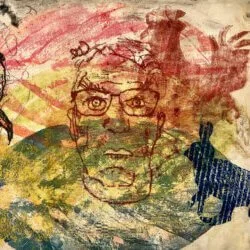
Featuring Works by Dennis Worrel, Mark Andres, and Richard Rowland
Thursday - Sunday | June 4th - 27th
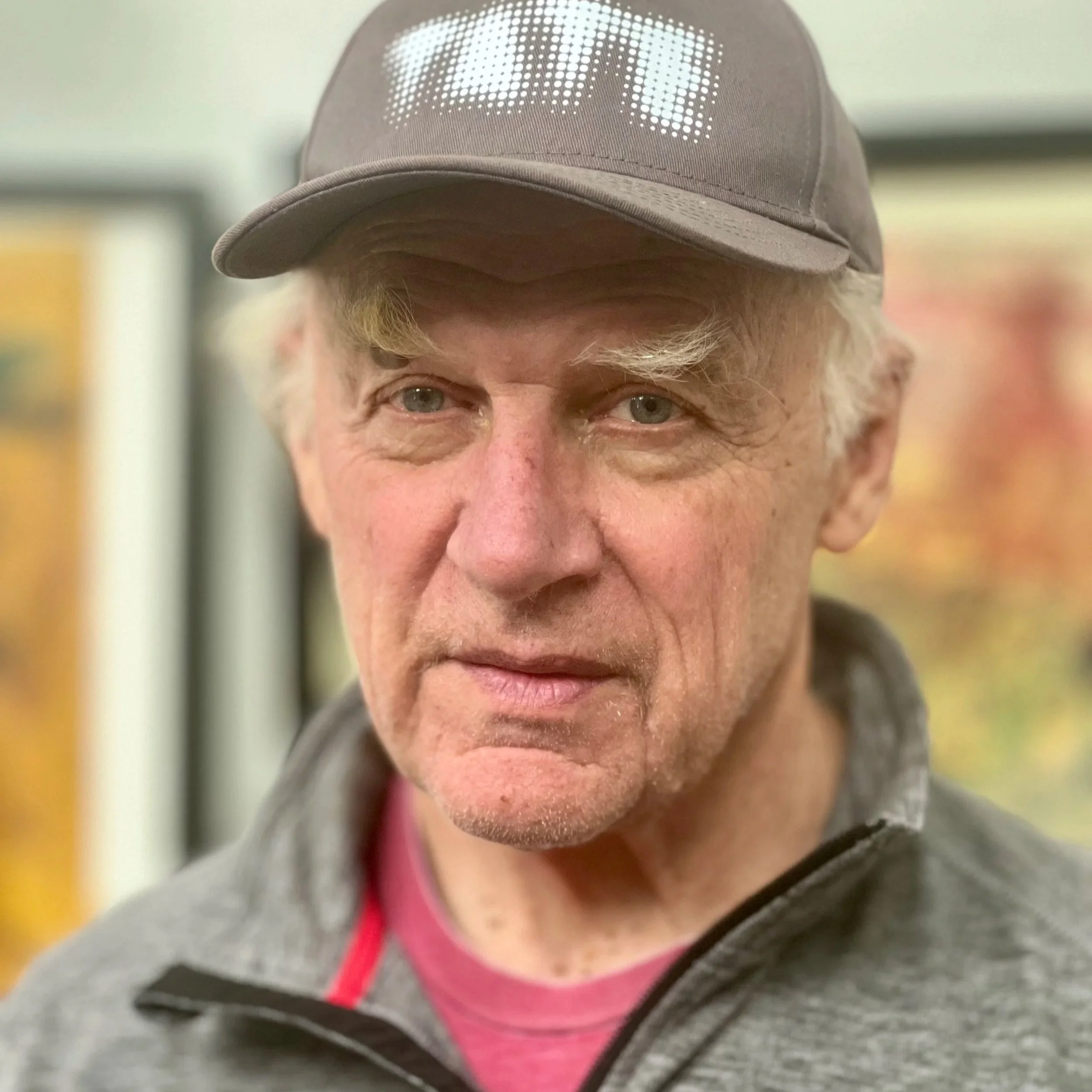
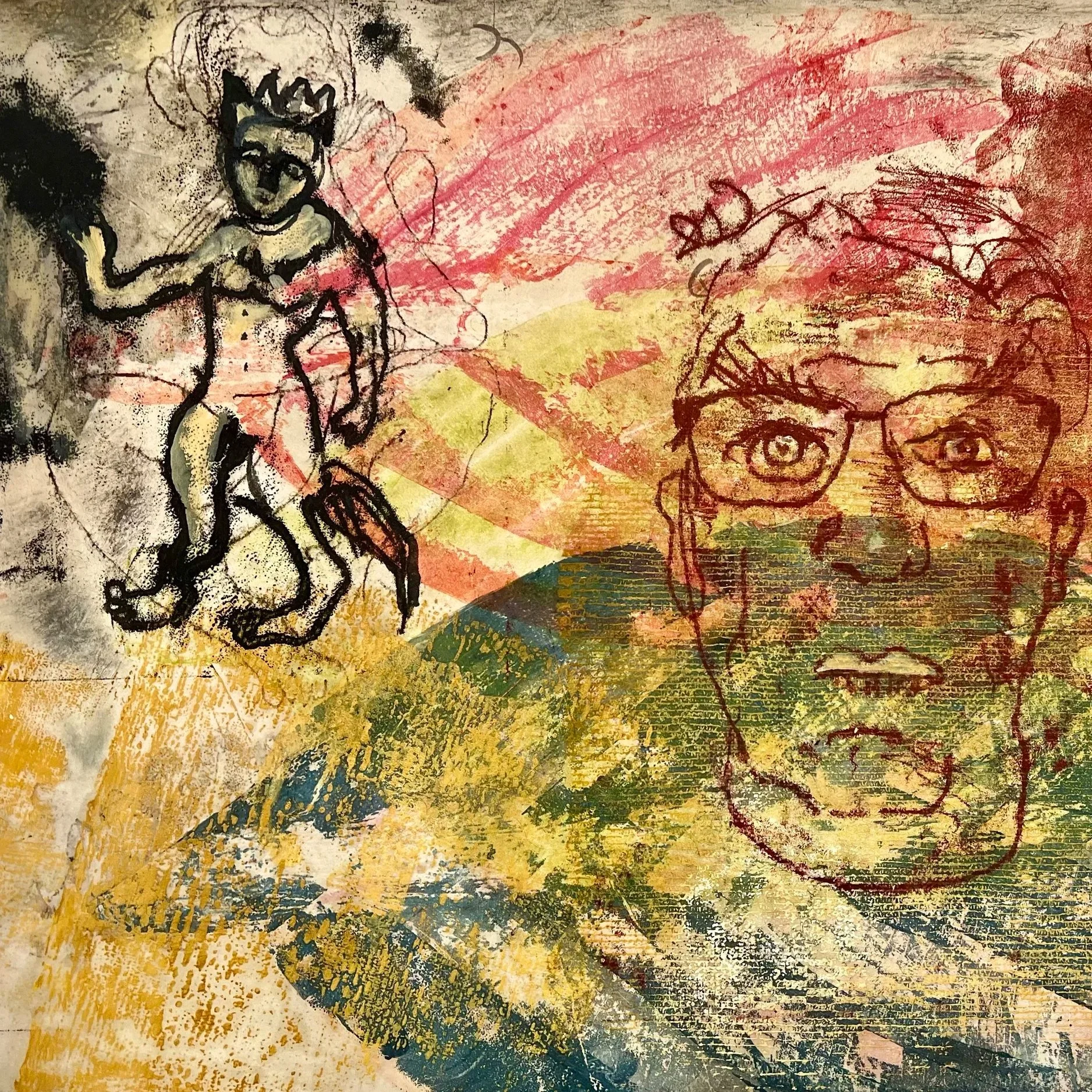
Dennis Worrel is a painter and printmaker. He currently lives and works on the northern Oregon Coast near Tillamook. His interests include traveling, hiking, reading, and gardening. He is a founding member of Arts Accelerated, a local non-profit gallery and art center. Dennis received his MFA in painting from the San Francisco Art Institute.
Strange Times
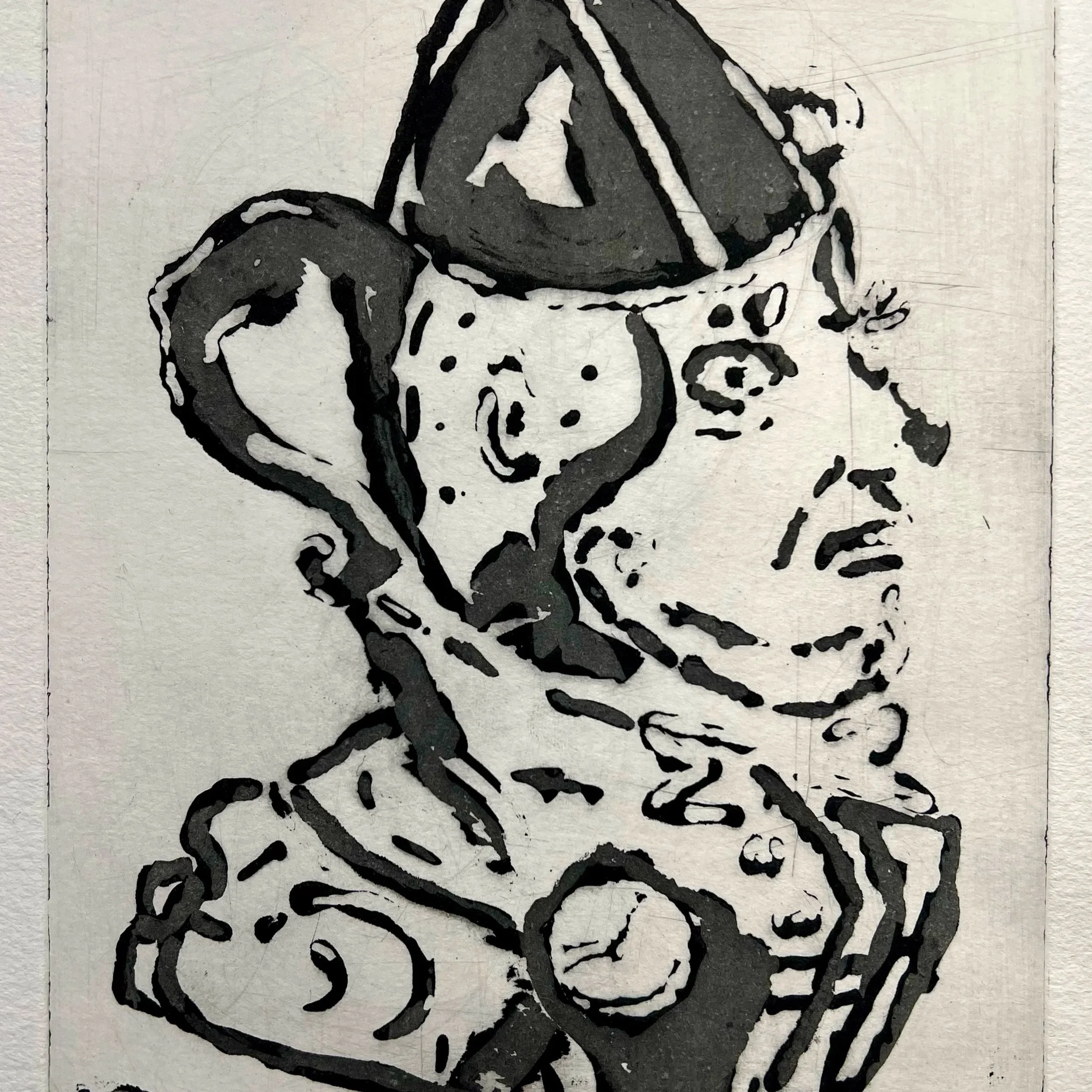
My recent work, Strange Times, responds to the chaotic and bizarre world we find ourselves living in. Like the Surrealists, it explores the interplay between dreams and reality, the strange, and sometimes nonsensical nature of our human identity and existence. The work draws on imagination, storytelling, history, mythology, and pop culture.
The imagery incorporates whimsical animals and enigmatic, playful figures including human–animal hybrids, guardians, and seers. These hybrids act as guides through uncertain terrain, reflecting the bizarre, dreamlike setting of the present moment.
I work in hybrid forms that blur the boundaries between printmaking, drawing, and painting. The process often begins with a monoprint—created by applying ink to a plate and pressing it onto paper to produce a unique, one-of-a-kind print. Rather than treating the monoprint as a finished piece I use it as a foundation to further drawing and revision. Layers of text, stencil, and gestural marks are layered over the printed image are added, allowing the image to remain fluid and responsive as it evolves into complex, textured, and richly colorful compositions.
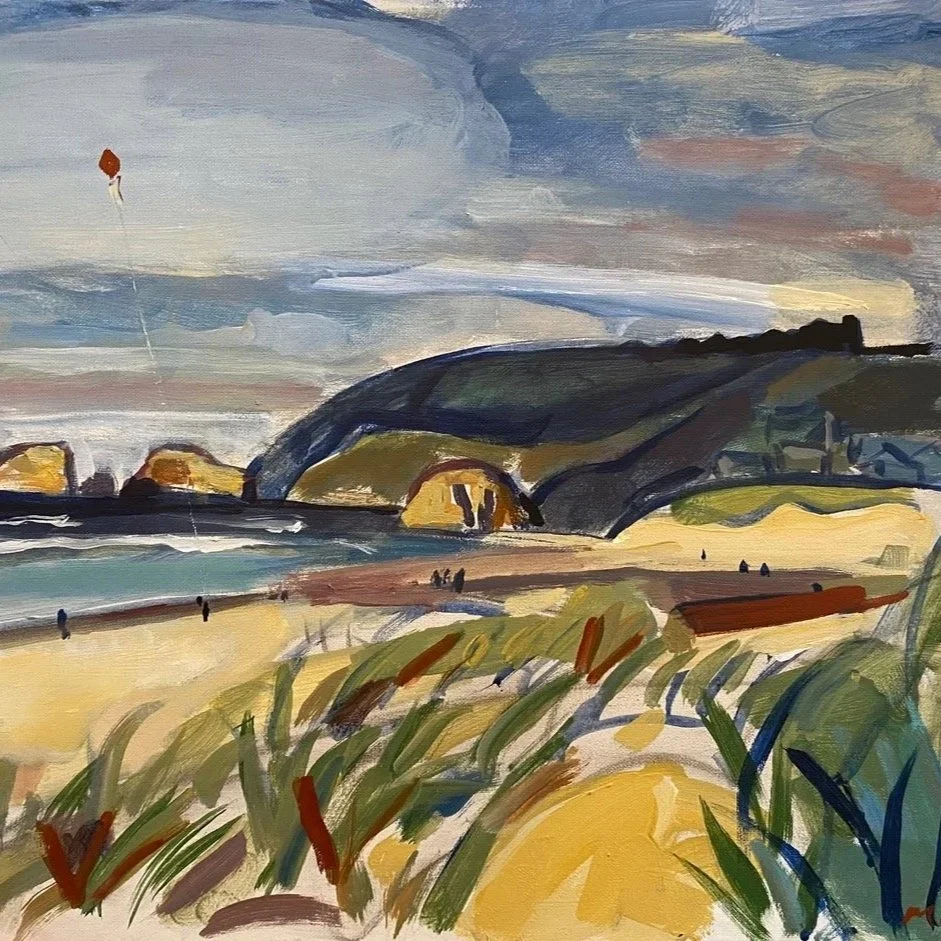
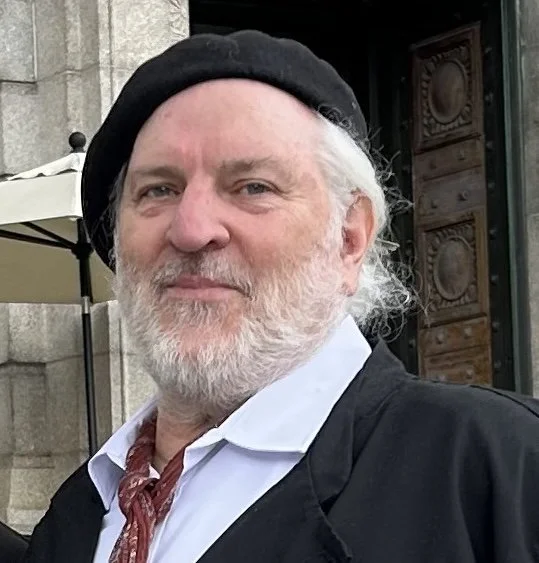
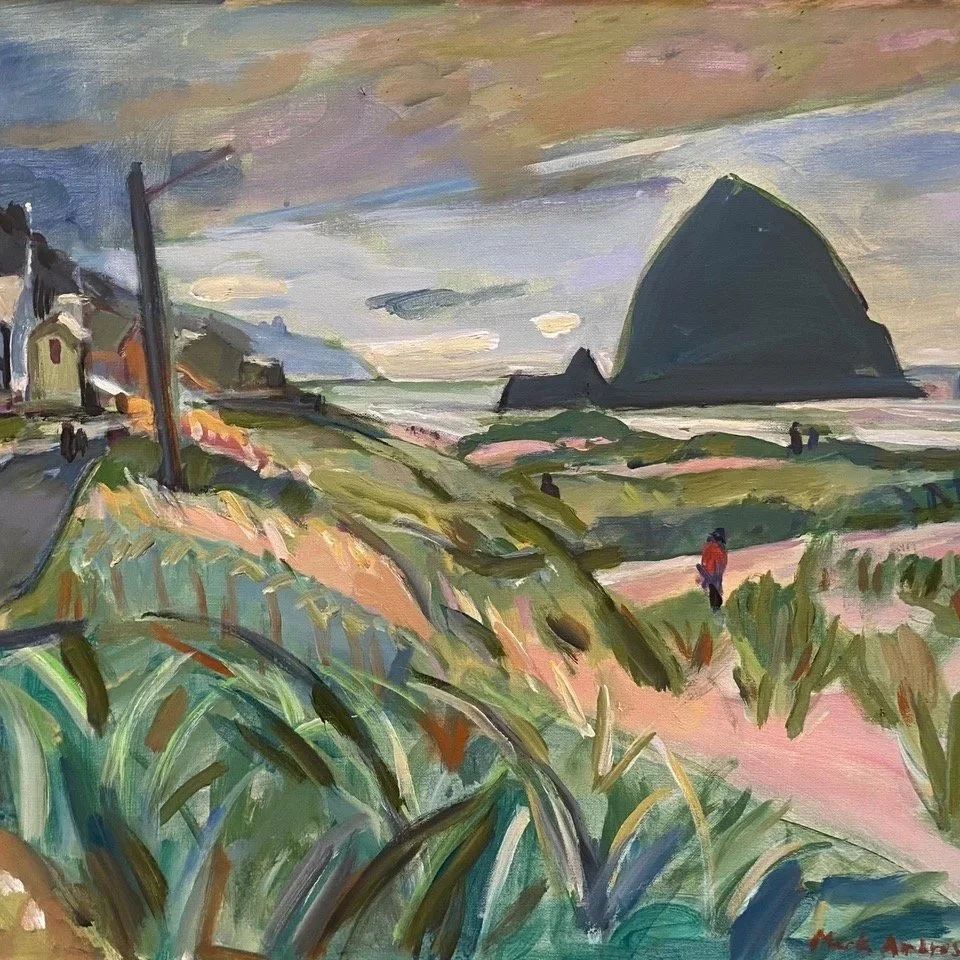
Mark Andres is a painter and award-winning filmmaker. His paintings are in many public collections including the Portland Art Museum, The Maryhill Museum, Oregon Health and Sciences University, the University of Portland and Portland Community College, where he has taught painting and drawing for over 30 years. He has written, illustrated and directed nine animated silent films, many of which have won Best Animated Film at festivals in Los Angeles, Chicago, New York and Mexico City. He is represented in Portland by Augen Gallery and in Astoria by Imogen Gallery. His profile on OPB’s Oregon Art Beat was nominated for a regional Emmy last year. The work in this exhibit highlights his long interest in river and coastal landscape painting.
Water Gazer
I paint in the space between outward and inward looking. The world asserts its hidden rhythms through the mind and eye. Those hidden rhythms are what thrill me when I look out, and which the photos I take inevitably fail to convey: the deepest mysteries— the rhythm of our origins—birth, death, the eternal return—when it’s only just a view of a river and a few buildings. Painting is the act of looking, a verb made into cloth, colored dirt, and goo, which at its best moments can hold the spirit of the artist at one with the spirit of the viewer.
Painting puts the world back together after the act of naming it has pulled it apart.
Painting was invented to convey the thing that cannot be conveyed in words, that “ungraspable phantom of life” which another water-gazer, Ishmael, in Melville’s Moby Dick, tells us is “the key to it all.”
Richard Rowland received his BA from Pacific University in Forest Grove, Oregon, where he studied art, religion, and ceramics under Judy Teufel and Professor Jan Shield. After receiving his BA, he studied ceramic materials under Ray Grimm and Jay Jensen at Portland State University in Portland, Oregon for an additional 2 & ½ years. In 2005, he received his MFA from the University of Tasmania-Academy of Arts, in Launceston, Australia, studying under Professor Vincent McGrath and Dr. Owen Rye.
Ahikaaroa: Conversations with Fire
The creative life I live is bound together by my cultural kuleana (responsibilities) that were given to me by my Polynesian ancestors and present-day mainland communities. These responsibilities especially include helping to take care of our natural world.
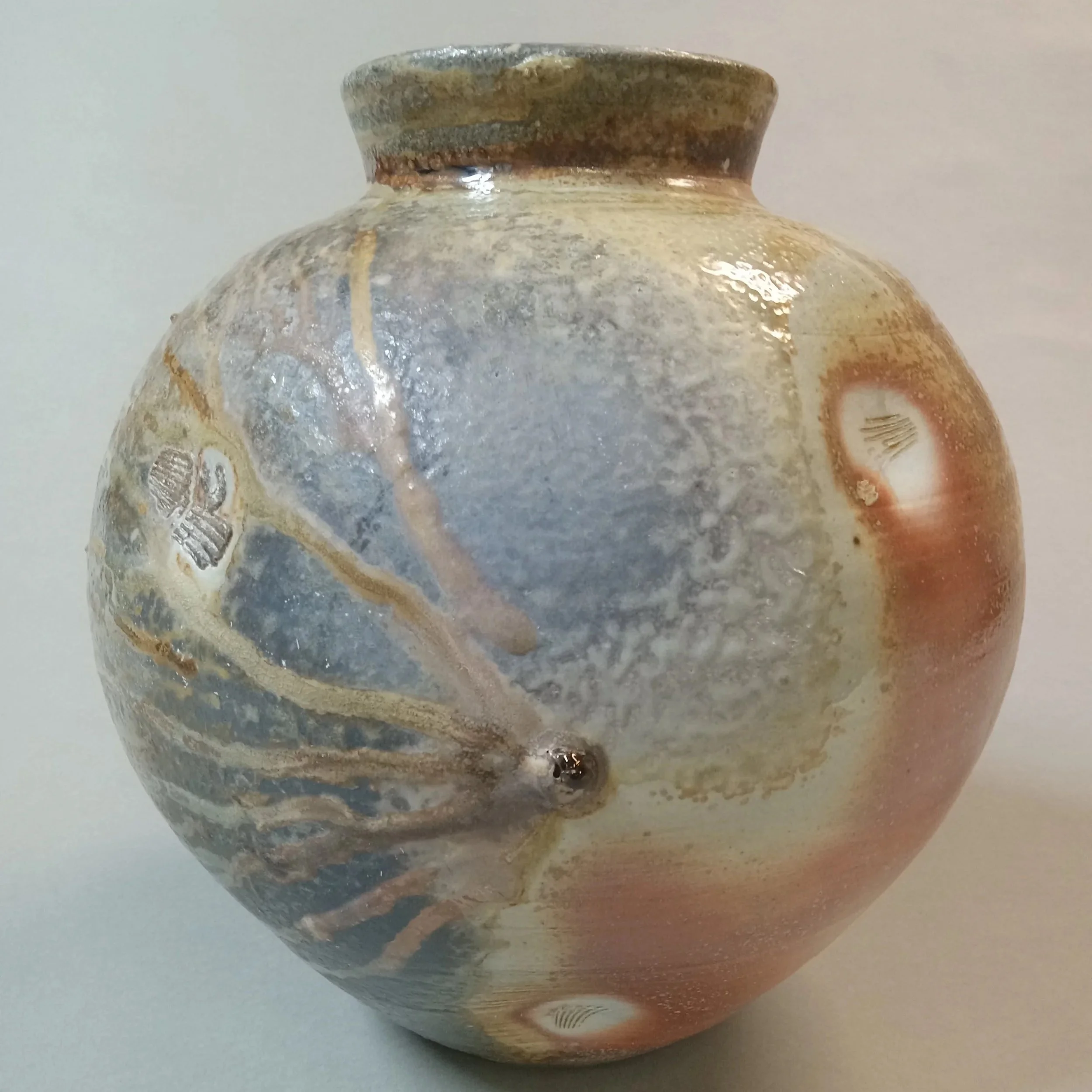
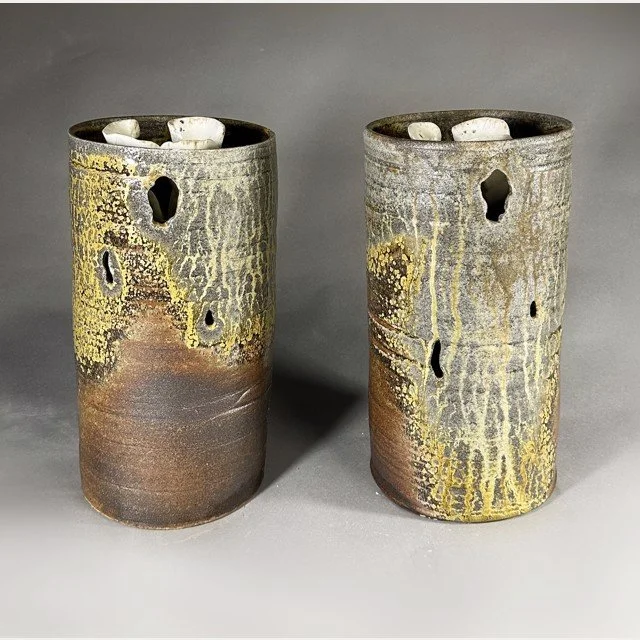
In the late 1970s and early 1980s I built a large clay studio and my first wood fired anagama, which was named The Astoria Dragon Kiln. In order to build this kiln, on low tides I was able to recover approximately 2200 used fire brick from the old cannery boilers whose burned up brick had been discarded into the Columbia River, in order to replace them with new brick. Initially though a potter friend, returning from Japan, and I built an anagama cave kiln that we dug into the hillside (replicating the original cave kilns and the style of high fire kilns that were brought to Japan in the 5th century by enslaved Korean potters behind my studio. With no cover over it, during the 3-day/night test firing, we were only able to reach approx.2000 degrees f because of the extremely wet winter. Many years later, in 2013, I began building a new brick anagama kiln. In 2018 the kiln was named by a selected delegation of Māori Uku (clay) Artists, “Ahikaaroa (Fire from long ago)”. The Artists traveled from Aotearoa, New Zealand to Astoria to work in our local community, create clay Art and help fire the new kiln after a traditional ceremonial naming.
The Hoffman Center Art Gallery is located at 594 Laneda Avenue, Manzanita. The exhibition is free and open to the public. The gallery is closed the last Sunday of every month.